
Travel archive:
Belgium –
Quintessentially
European
Few countries in Europe offer such density of culture, history and craftsmanship within such a compact landscape as Belgium.
-
April to October, as well as the Christmas season, when cities take on a more intimate and atmospheric character.
-
For a remarkably dense and layered cultural landscape – where art, craftsmanship, history and contemporary European life meet at the very heart of the continent.
-
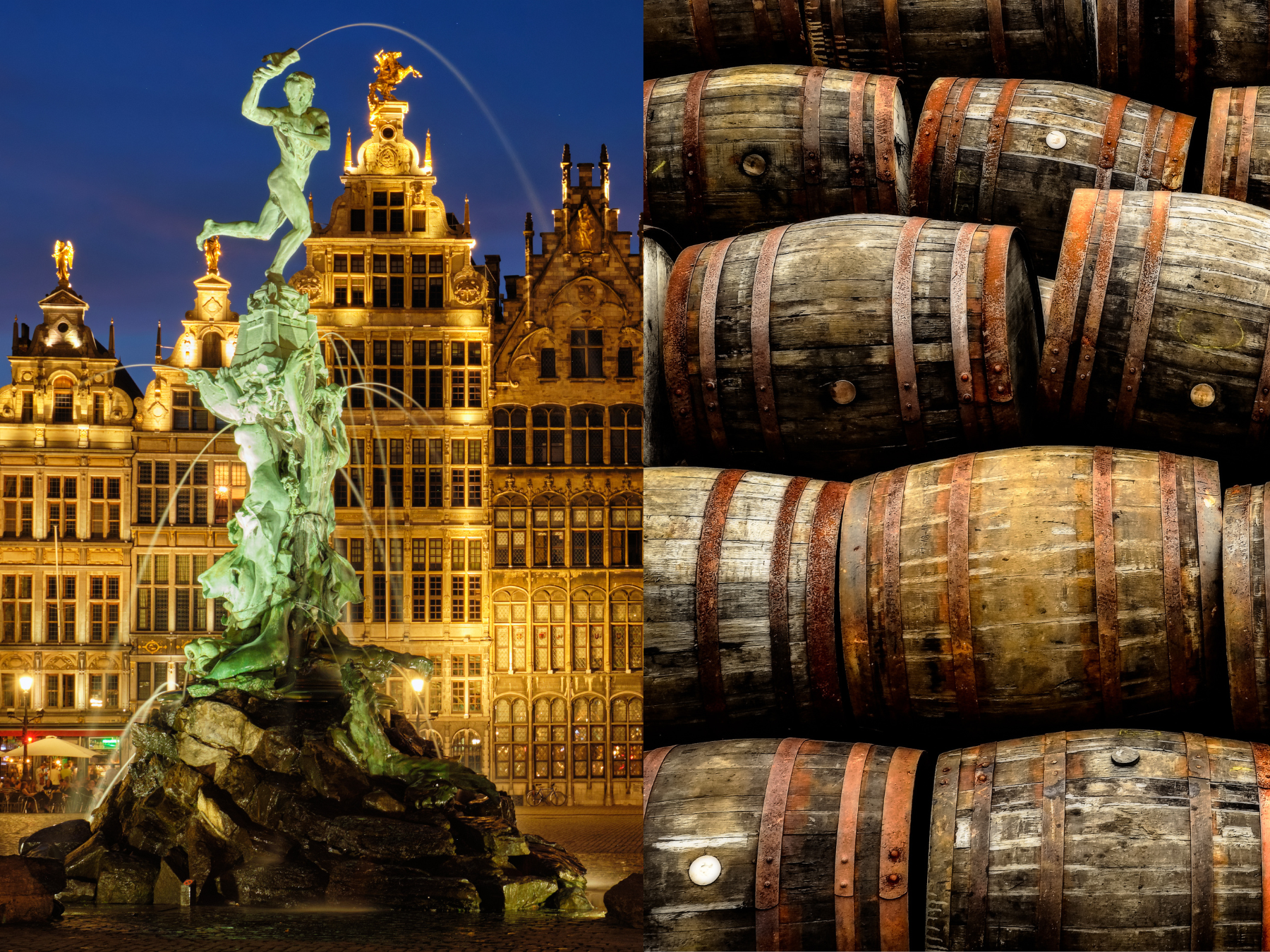
Brussels and the European Union, Antwerp’s art and diamond heritage, Ghent and Bruges, medieval towns, Belgian beer culture, chocolate and gastronomy, art museums, World War history, lace traditions, multilingual culture and European crossroads.
>>>
Roughly the size of Maryland, Belgium unfolds as a richly layered crossroads. From the French-speaking south to the Flemish north and the German-speaking east, languages and traditions meet in a way that feels both natural and deeply European.
At its center lies Brussels – the bilingual and multinational capital of the European Union – where political life, international influence and everyday culture coexist. From here, much of Europe feels within reach. Paris and London are only a few hours away by train, and borders with the Netherlands, Luxembourg, France and Germany are never far.
Belgium’s cultural legacy is both refined and deeply rooted. Its beer culture, recognized by UNESCO as Intangible Cultural Heritage, reflects centuries of tradition and craftsmanship. Chocolate, lace and the historic diamond trade have further shaped the country’s global identity, particularly in cities such as Antwerp, long considered one of the world’s leading centers for diamonds.
Across the country, art and architecture remain central. Medieval towns such as Ghent and Bruges preserve a remarkable sense of continuity, while Antwerp and Brussels offer some of Europe’s most significant art collections, alongside a vibrant contemporary scene.
Belgium’s culinary tradition reflects this same balance between heritage and innovation. From refined gastronomy to simple, deeply satisfying classics, food and drink remain an integral part of daily life.
Yet beyond its cultural richness, Belgium also carries the weight of European history. Landscapes marked by the events of the World Wars offer a more reflective dimension to the journey, adding depth and perspective.
Belgium is, in many ways, Europe in miniature – a place where cultures meet, histories overlap, and the continent’s character becomes particularly visible.