
Travel archive:
Veneto – The Green Hinterland of Venice
Beyond Venice, the region of Veneto opens into a quieter landscape – one that unfolds gradually, away from the immediacy of canals and crowds. Here, the experience shifts, the pace softens, the spaces widen, and the region reveals a different kind of richness – one shaped by history, architecture, and a grounded and enduring way of life.
-
Spring (April–May) and early autumn (September–October)
-
Renaissance legacy, beautiful varied landscapes, genuine regional cuisine, world-renowned wines alongside lesser-known local treasures, literary depth, rustic charm and quiet elegance.
-
Palladian architecture, Giotto’s Scrovegni Chapel, Padua’s traditional bars and trattorias, Valpolicella and Colli Euganei wines, the origins of tiramisù, village-hopping in the countryside, Monte Grappa, Vicenza, local cuisine, literary echoes and hidden inland Veneto.
>>>
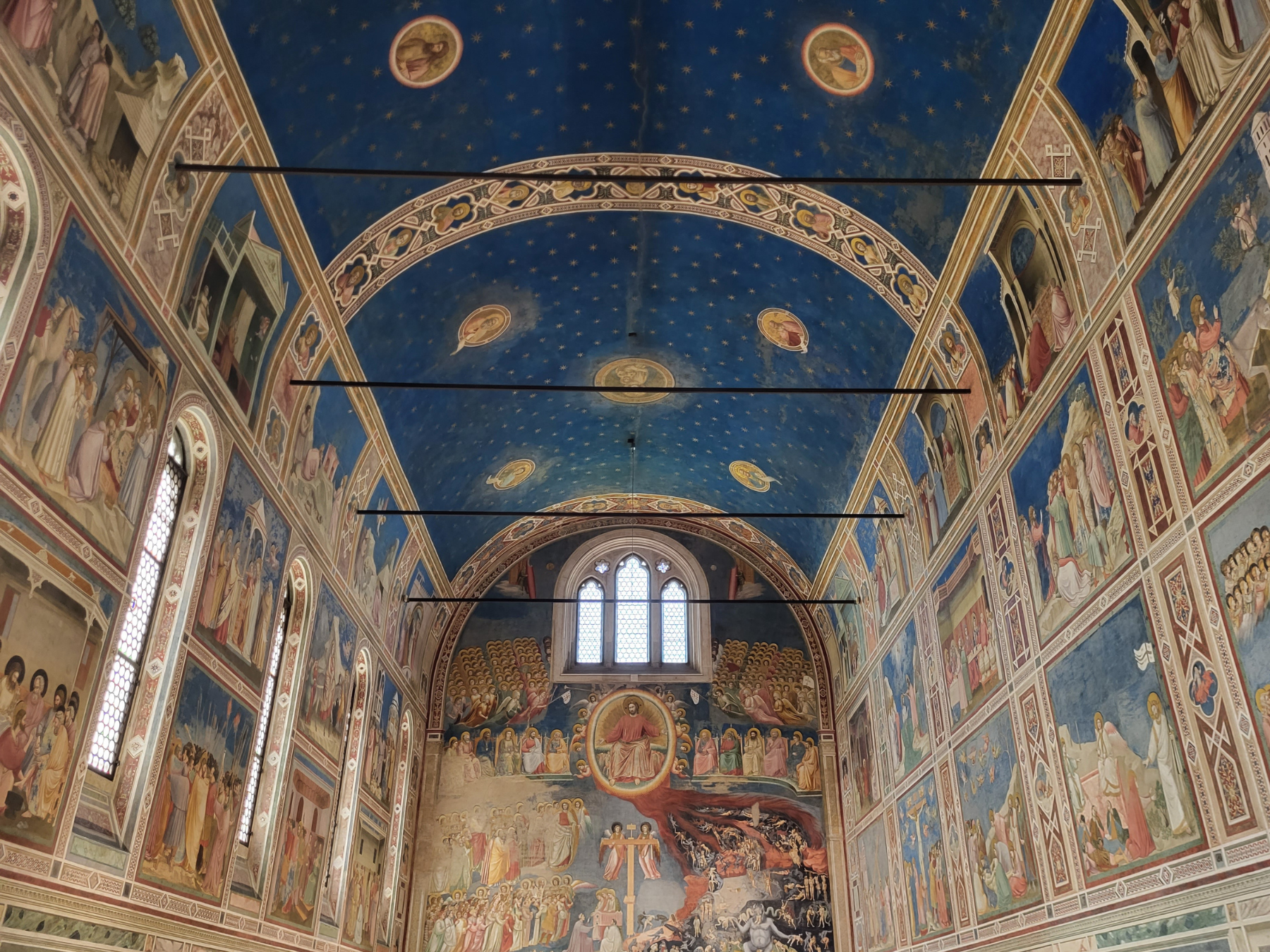
At the heart of this inland lies Padua, an elegant university city where intellectual life and artistic heritage have long intersected. Its arcaded streets, lively piazzas, and layered architecture reflect a continuity that reaches back centuries. Much of the art and architecture that would later define the Renaissance in cities such as Rome and Florence can be traced to developments here centuries earlier. Giotto's stunning interior the Scrovegni Chapel would serve as insipration for Michelangelo's work in the Sistine Chapel of Rome two hundred years later, just to name an example.
Throughout Veneto, culture is not concentrated in a single place, but dispersed – in towns, landscapes, and traditions that remain closely connected to daily life as well as early Italian history.
In Vicenza, the work of Andrea Palladio has shaped not only the city itself, but architectural thinking throughout Europe as well as in America. His sense of proportion and balance continues to define the visual identity of the region. Further north, the land begins to rise. Around Monte Grappa and into the foothills, small villages are set among vineyards and wooded slopes, where the rhythm of life is quieter and more closely tied to the land.
The culinary identity of Veneto is balanced, yet full of surprises. From the structured wines of Valpolicella to the softer, more volcanic expressions of the Colli Euganei, Veneto offers a spectrum of flavors that are best understood over time, and often in their local context.Despite its proximity to Venice, this inland remains relatively untouched by large-scale tourism. Rather, it is a region where Italians themselves travel – drawn by its depth, its subtlety, and its ability to offer something more enduring than the immediate.
The region of Veneto does not announce itself. It reveals itself – slowly, and with quiet confidence.